home who we are paph phrags epidendrums lycastes select flasks/compots miscellaneous order


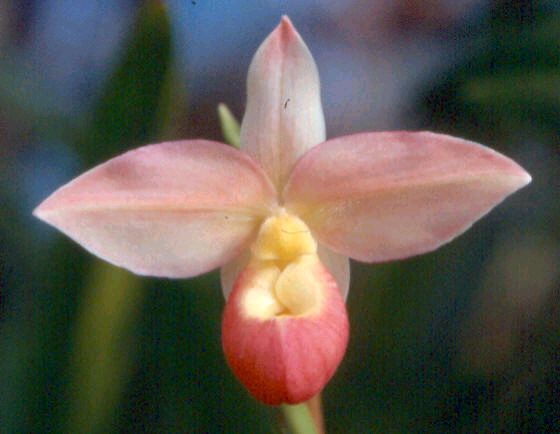
Phrag. Grouville

PHRAGMIPEDIUMS


Updated: August 6, 2011

PHRAGMIPEDIUM SPECIES AND HYBRIDS

We have just updated all of our Phrag listings (February 27, 2010)!! Never tried Phrags?... imagine an orchid that it will be close to impossible to overwater. We grow these plants in moderately bright light, and with the exception of the caudatums and xerophyticums, we water them frequently. Remember...most Phrags are sequential bloomers, in bloom for months... unless, of course, you are fortunate to have multifloras (caudatum, wallisii and their hybrids), with 3-5 flowers open simaltaneously with 1-3 foot-long petals.

Woodstream Orchids has become one of the leading Phragmipedium hybridizers and producers of seed-grown Phrag species in the United States. The future is bright for Phrags with our continuing success at producing commercial quantities of highly desireable species and hybrids. You will find unique hybrids listed below, many of which are unavailable elsewhere, at this time. The discovery of Phrag kovachii in Peru will eventually open the door to a new generation of Phragmipedium hybrids. We have legally imported flasks of this magnificent species from Peru to grow up and select plants for our breeding program. We should have seedlings for sale in the future.

As the popularity of Phragmipediums grew with the discovery of Phrag besseae, more and more hybrids were attempted by Phrag breeders. It was soon discovered that there were some poorly-defined genetic imcompatibilities that prevented good seed production in many crosses. Dr. Donald Wimber, working at the Eric Young Orchid Foundation on the Isle of Jersey, in the United Kingdom, and others devised laboratory methods to induce Phragmipedim seed to double their DNA chromosome count from normal (diploid, (2N)) to tetraploid (4N). When plants were crossed with one another, or with a normal diploid (2N) plants, these breeding incompatabilities were greatly reduced, and seed production increased.

Both tetraploid (4N) plants and triploid (3N) plants often exhibit improvements in flower size, color, substance, and sometimes, growth rate, when compared to similar 2N plants. On the other hand, 3N and 4N plants often grow larger than 2N plants and may produce fewer flowers. This said, some of the most spectacular Phragmipedium show plants seen today come from 3N and 4N breeding.

On the other hand.... miniature orchids have taken hold in the orchid world. Small-growing Cattleyas, Phals, and now Paph are very popular. Woodstream Orchids is pleased to introduce our unique has been working on breeding miniature and small-growing Phrags for the past 5-7 years. We have now built up enough stock to offer them for sale. LOOK FOR OUR ARTICLE ON MINIATURE PHRAGS IN A 2010 ISSUE ORCHID DIGEST! Please click on the Miniature Phragmipedium link below!

Catalog Code: ls = leaf span.

Phragmipedium Species

Phragmipedium besseae - Influenced Hybrids

Phragmipedium Long Petal Multiflora Hybrids

Phragmipedium Pink and Other Novelty Hybrids

NEW!! Miniature and Compact-Growing Phragmipediums


RETURN TO TOP